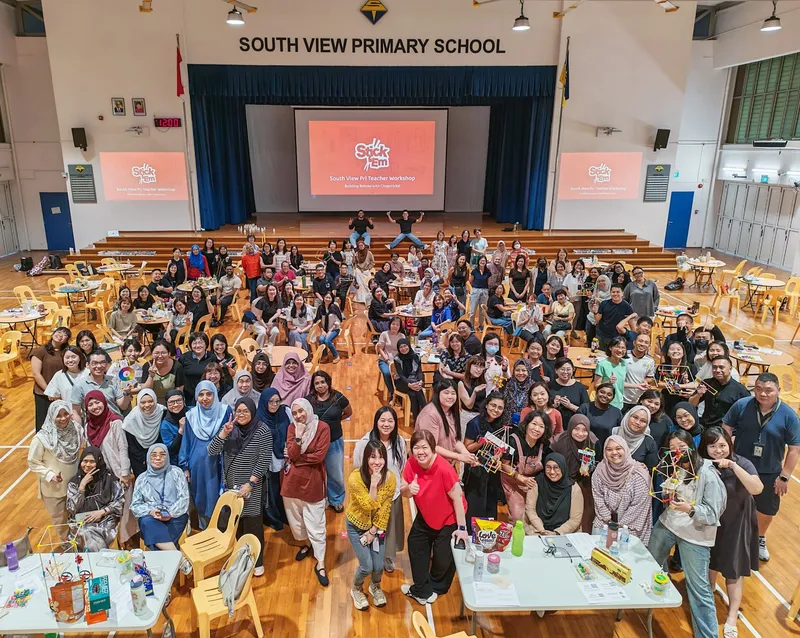
South View Primary School
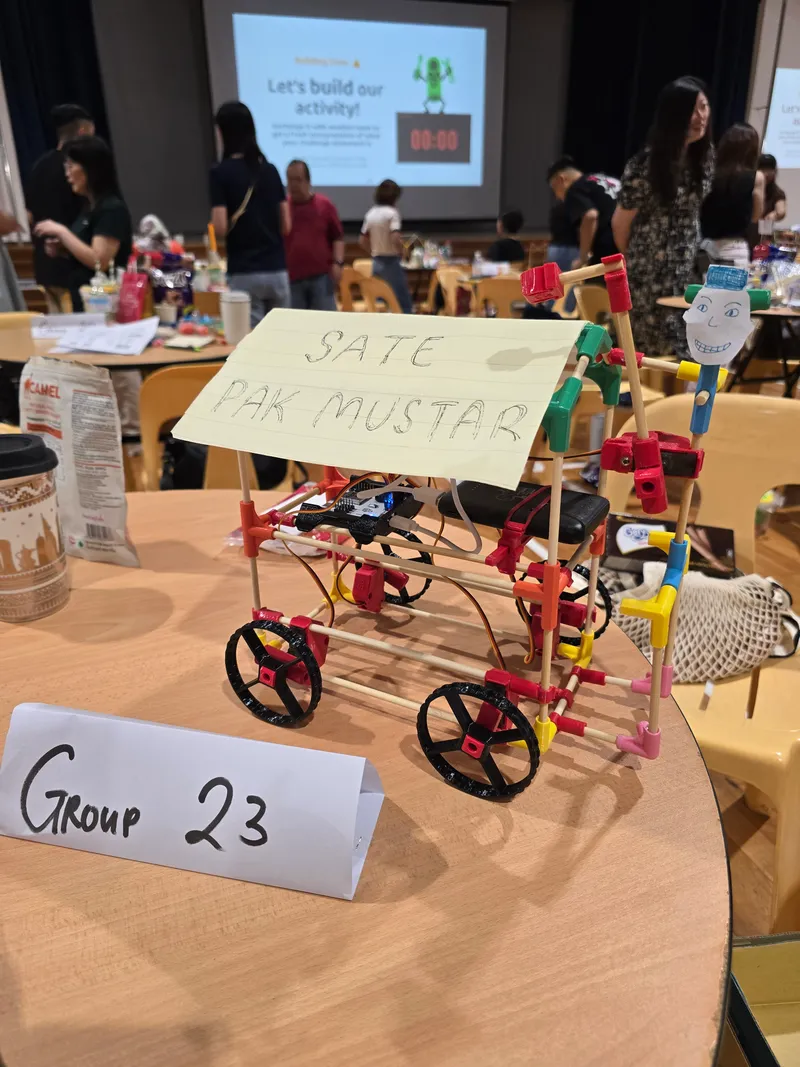
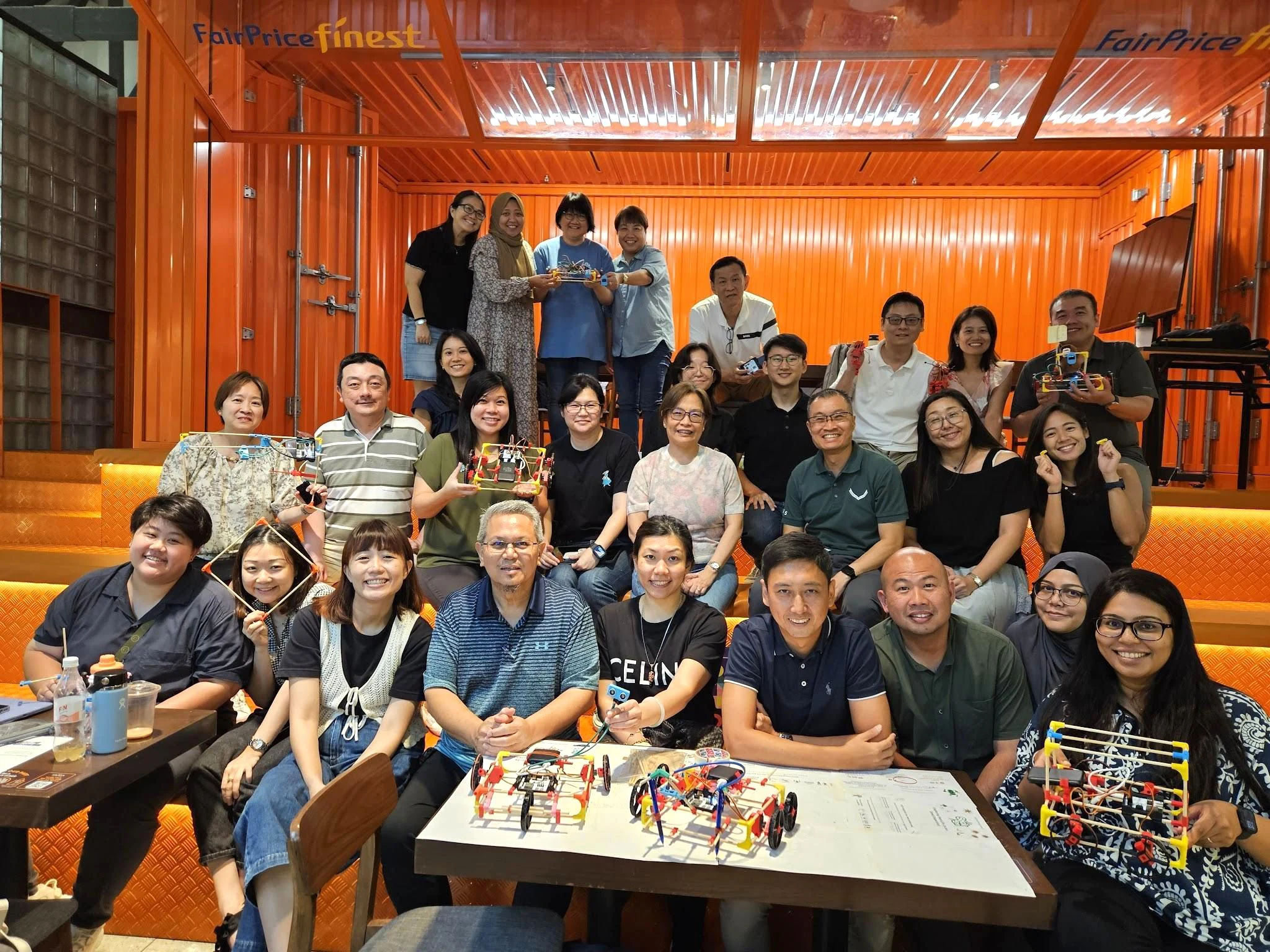
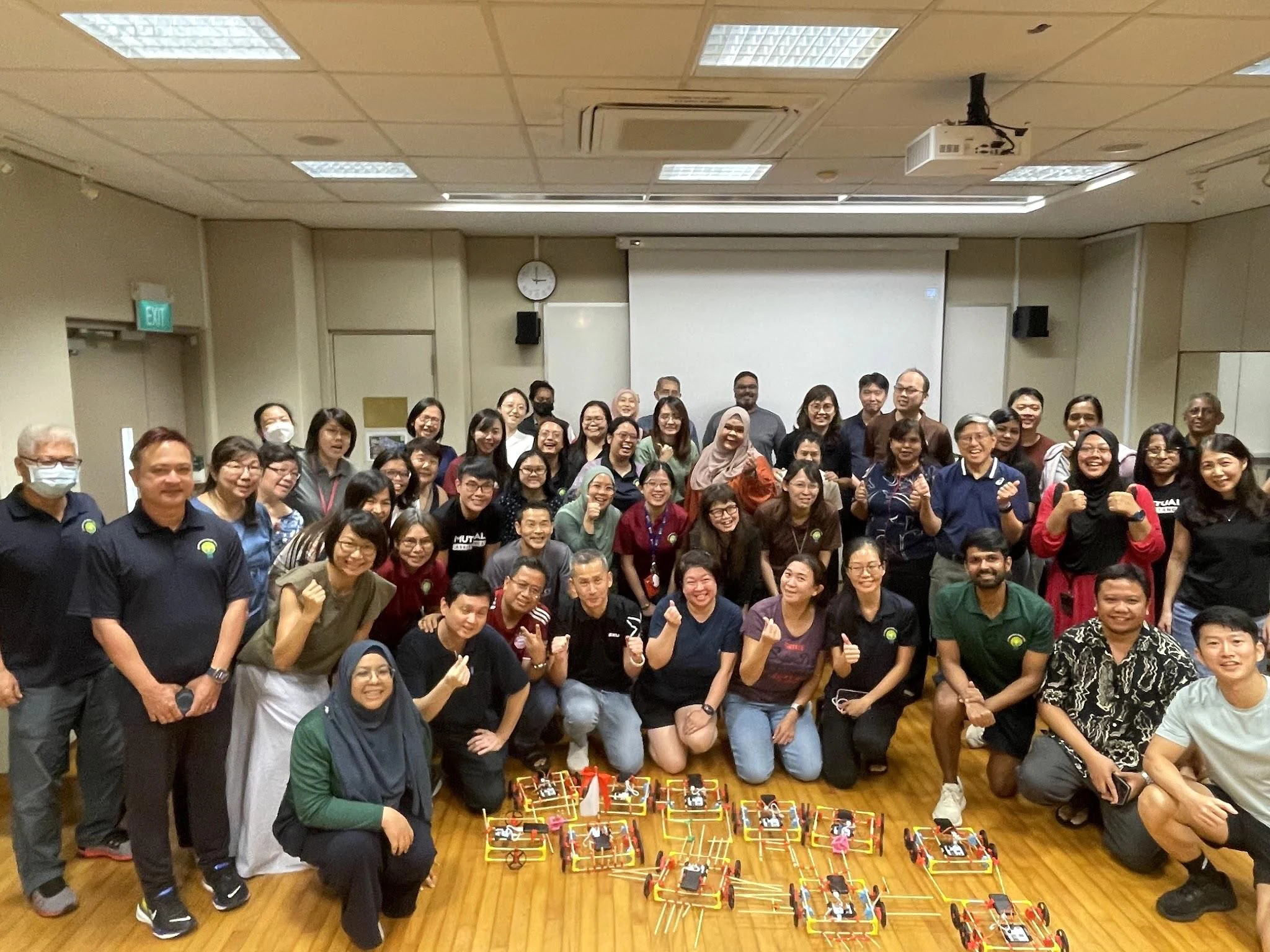
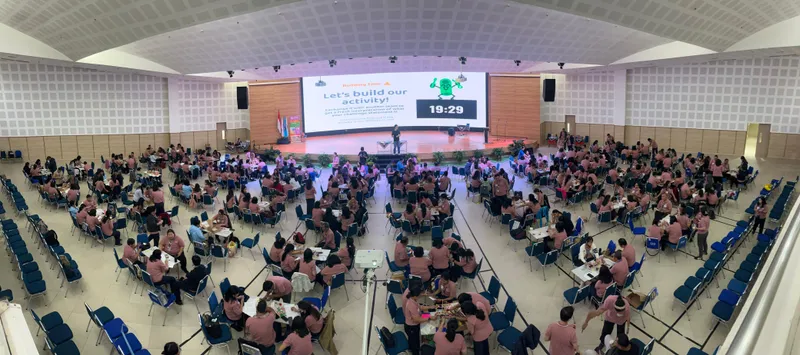
A staff bonding afternoon for the whole school in the hall, run by two of us. Groups designed their own builds, one of them a satay cart.
Professional development
In one afternoon, every department designs a hands-on activity for its own subject, has colleagues from another department test it, and leaves ready to teach it next week.
What happens
The same shape every time: learn the kit, build with it, then design and peer-review an activity for your own class.
130 min
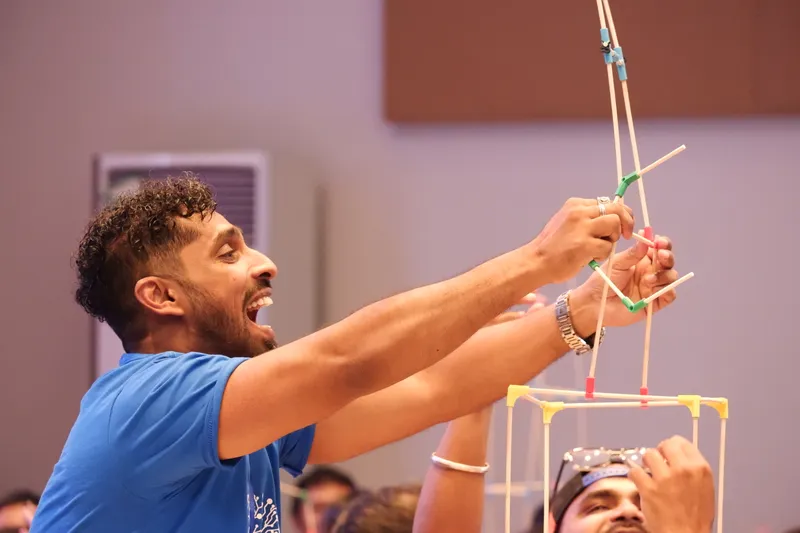
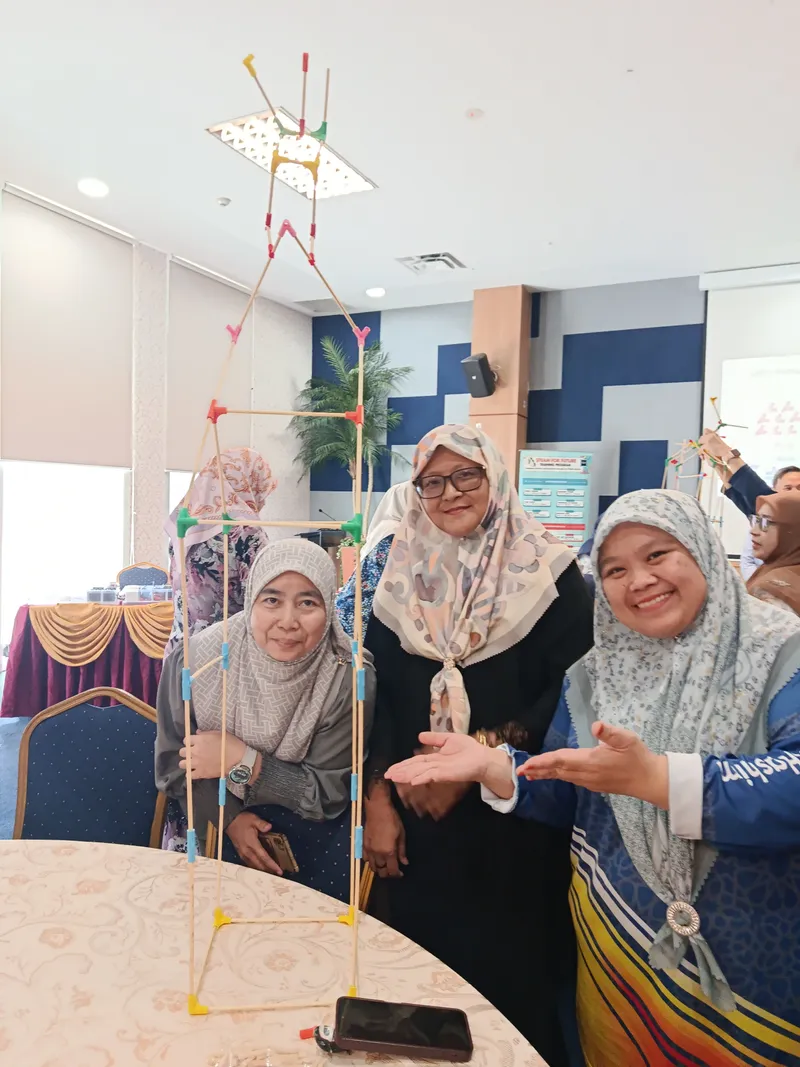
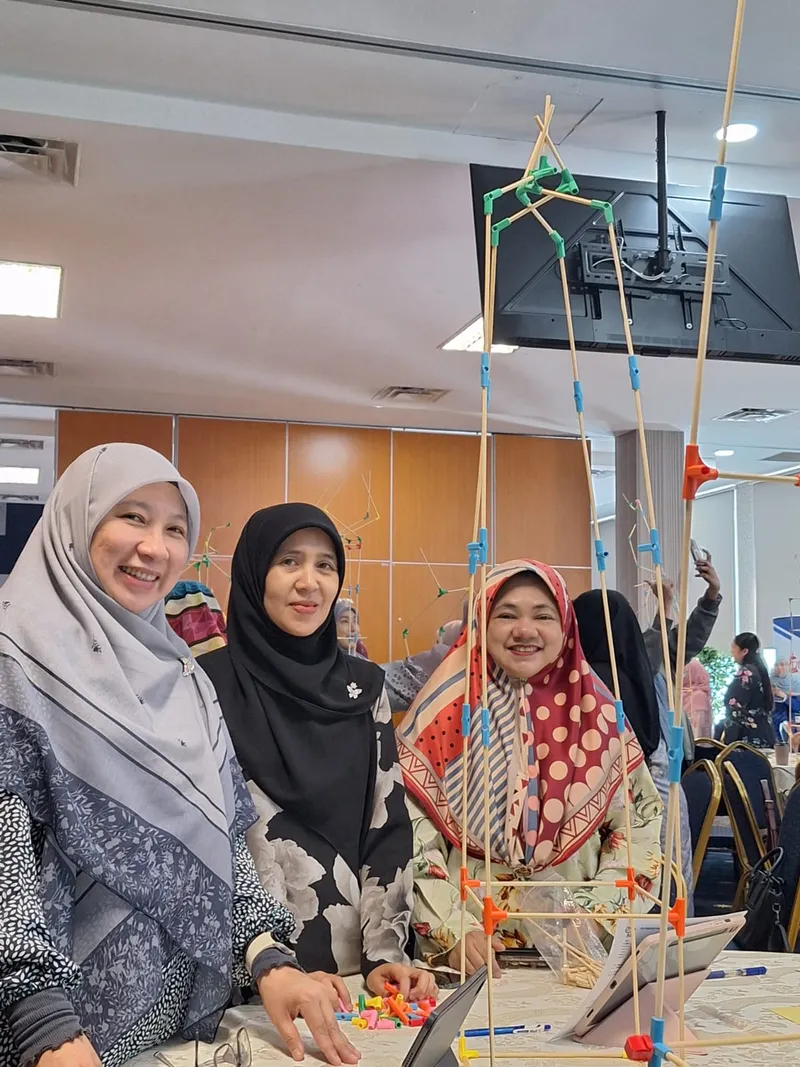
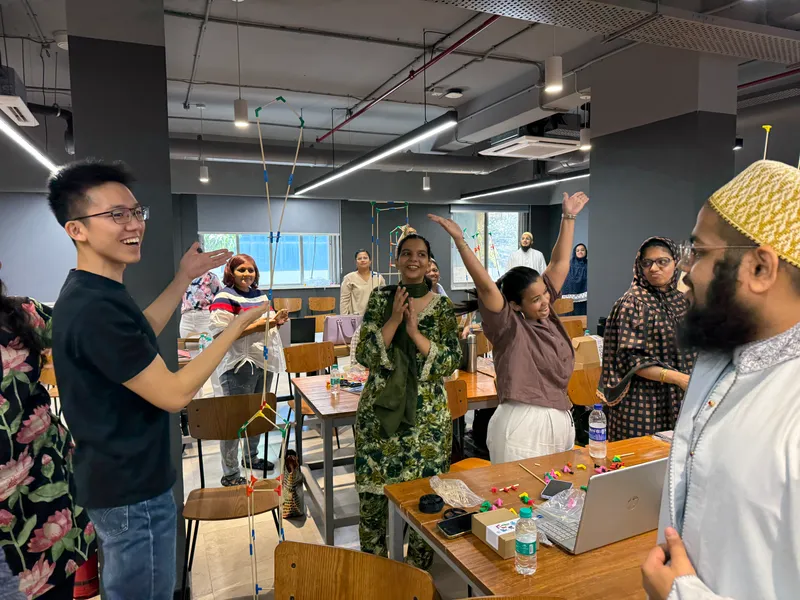
Teams race to build the tallest free-standing tower out of chopsticks and connectors. It breaks the ice, and it teaches the parts faster than any slide.
245 min
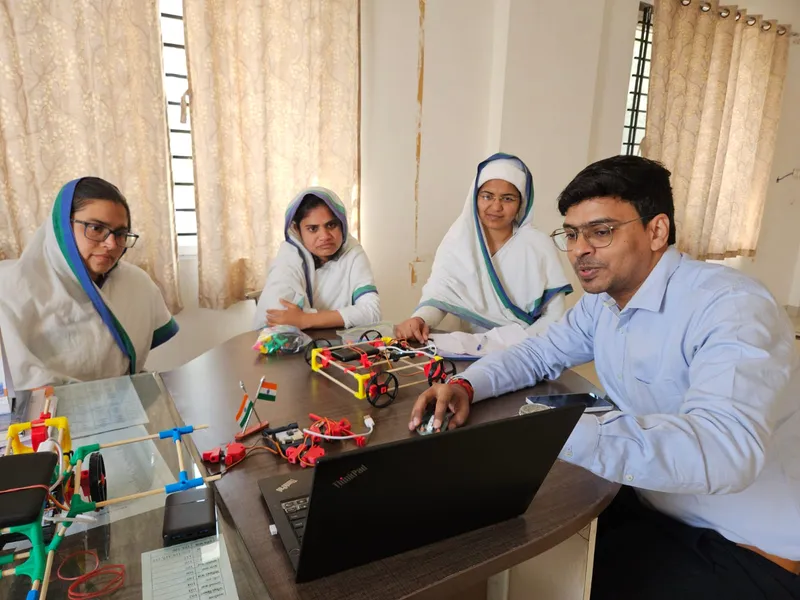
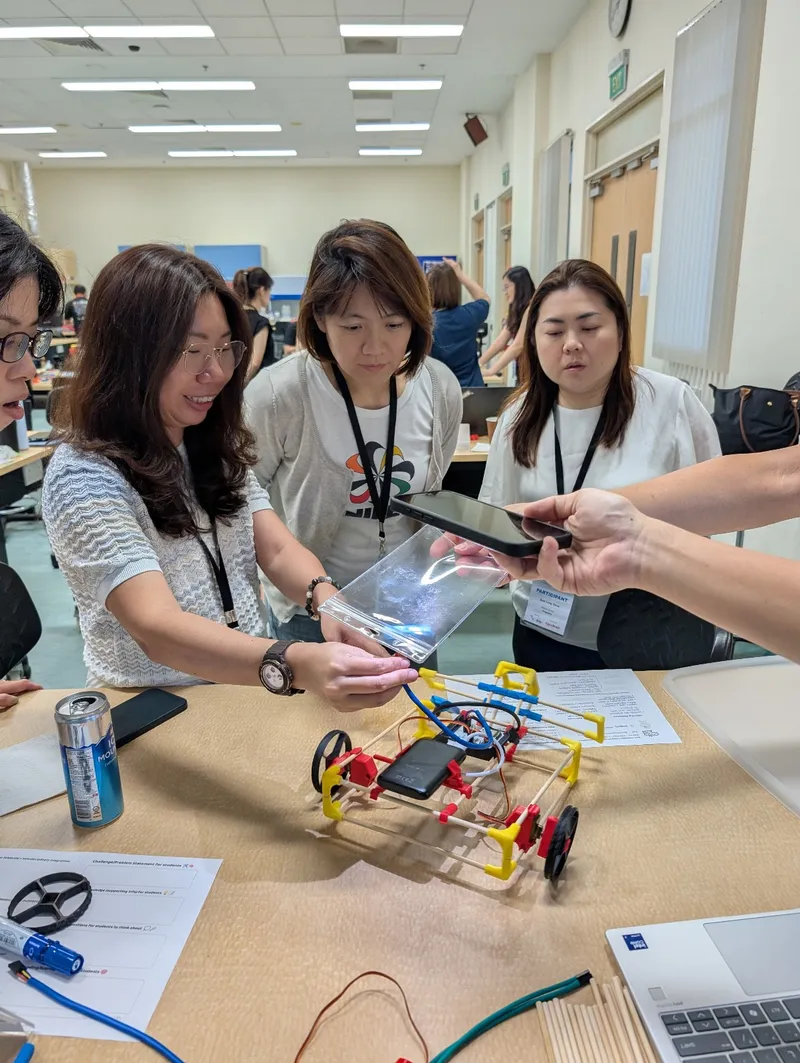
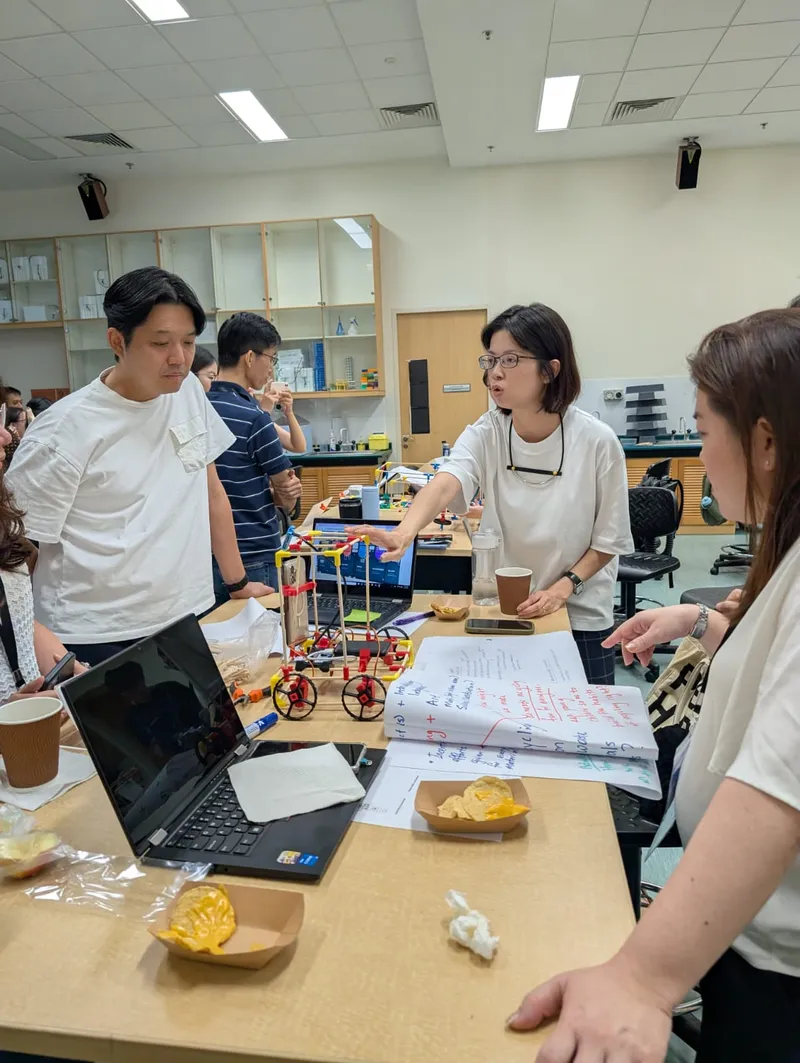
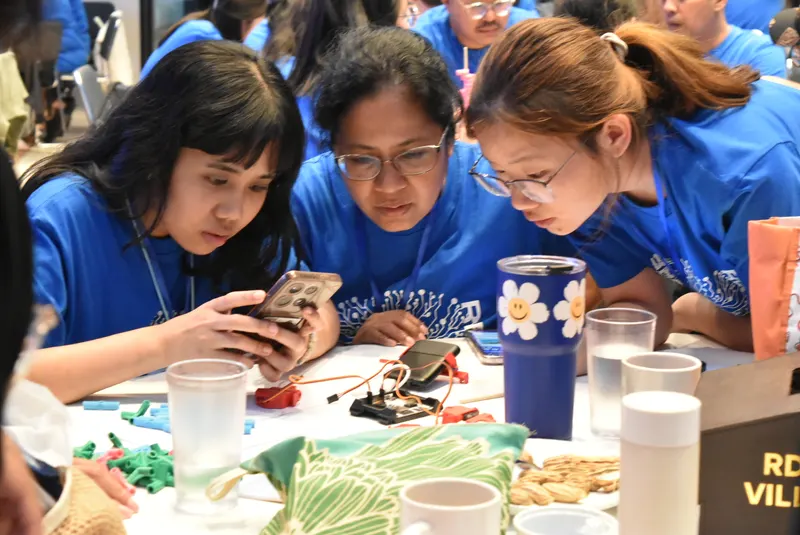
Plug in the board and motors, then drive your robot from a phone over Bluetooth in about 10 seconds. No laptop needed.
360 min
In department groups, teachers fill in our Lesson Design Template: the concept, how they will know students learned it, and which E21CC competencies it builds. The Academy’s 100+ lessons are there to borrow from.
430 min
Each team hands its challenge card to a team from another department, who build it without any help. Then everyone walks the room and says what was fun, what was hard, and what would trip up a student.
515 min
Everything goes back into three labelled boxes in five minutes. Every teacher receives a certificate, and we show you the Academy, the control app, and how to ask us for a lesson we have not written yet.
Teacher PD sessions are typically 3 hours long.
How it is built
Every activity teachers design is mapped to MOE’s 21st Century Competencies before anyone builds it. The template asks which competencies the activity develops and how, next to what students should learn and how you will know they learned it.
The afternoon itself is a design cycle. Teachers define a problem for their students, prototype it with the kit, have it tested by colleagues who have never seen it, take their feedback and improve it. It is the same cycle their students will go through in class.
For the teacher
Core subject, and any other subjects it brings in
Learning outcomes, and how you will measure them
Which 21st Century Competencies it develops, and how
How is hands-on learning used?
For the students
“Design a tabletop catapult that launches a ping-pong ball at least 1.5 metres.”
Guiding questions
What you already know
What you will be scored on
Printed on one sheet that folds in half, so the team who builds your challenge only sees the student side.
What teachers make
Every department leaves with something for its own syllabus. Not every activity needs a robot: some of the best are just building.
A tabletop catapult that sends a ping-pong ball 1.5 metres, for elastic potential energy. A model seed that shows how it disperses.
Every group builds one building for a model town, then the class works out the town’s total volume and area.
A dragon boat robot, presented in Chinese: why dragon boats were made and what the designs mean. A mascot for the Chinese Zodiac.
Recreate or futurise a Singapore symbol: a Samsui Merlion, Supertrees, a Merlion that lights up.
An inclusive playground for friends with different needs. A rubbish truck that makes a sanitation worker’s day easier.
A 1:50 model of a stormwater system that cuts the water left on the ground after heavy rain.
Add two sensors: a gate that greets whoever arrives, a fan that switches on when the room warms up, a robot that cleans canteen tables.
A superhero fashion show, a drawing machine that makes patterns, a kite prototyped before it is made for real.
Case studies
Whole staffs, single departments and teacher education programmes. Here are some of them.
A staff bonding afternoon for the whole school in the hall, run by two of us. Groups designed their own builds, one of them a satay cart.
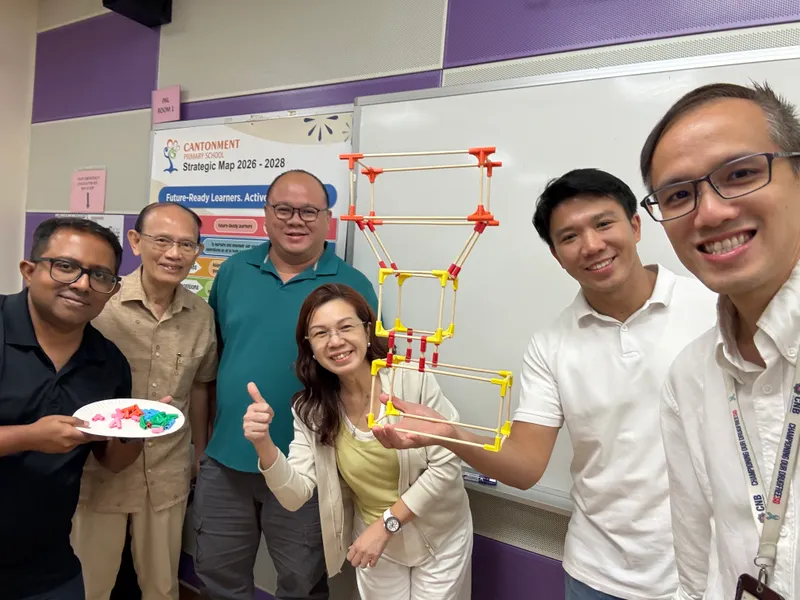
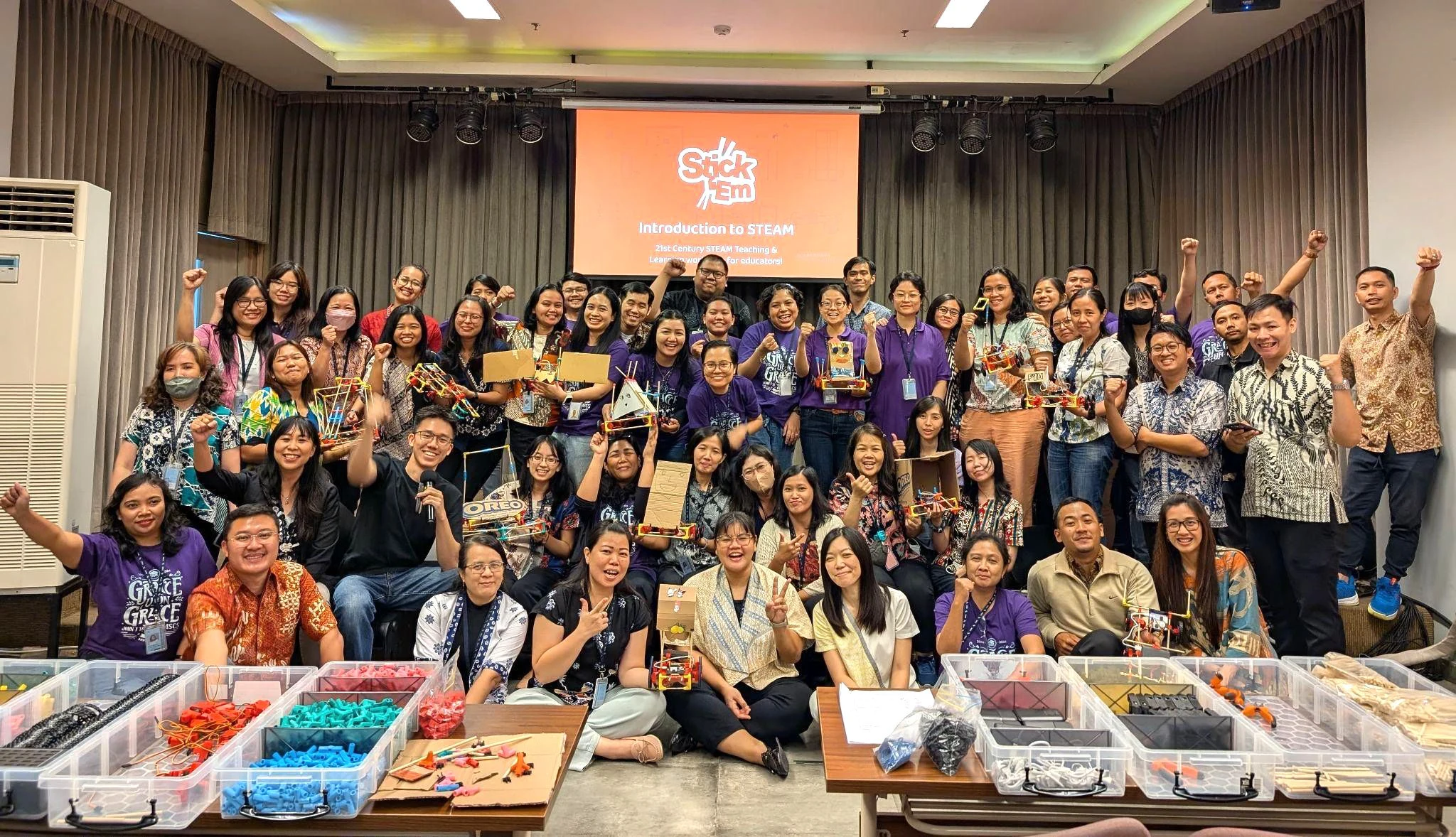
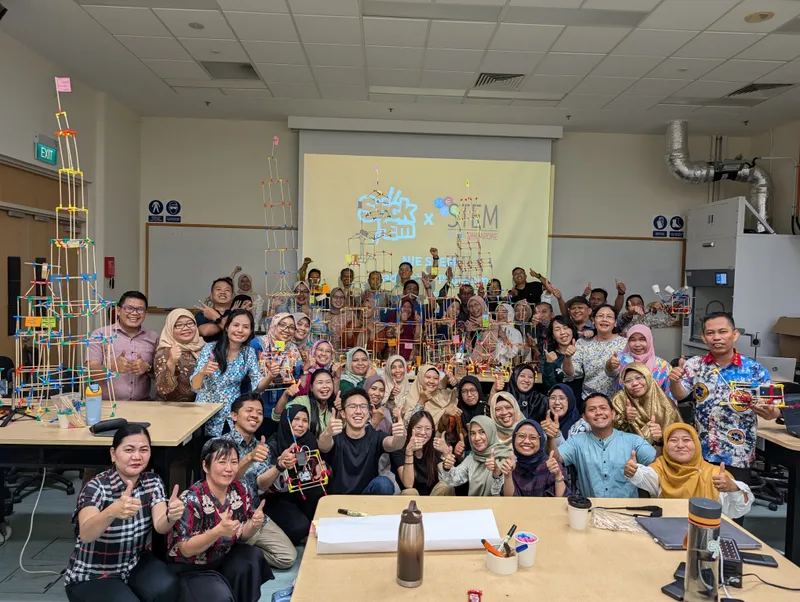
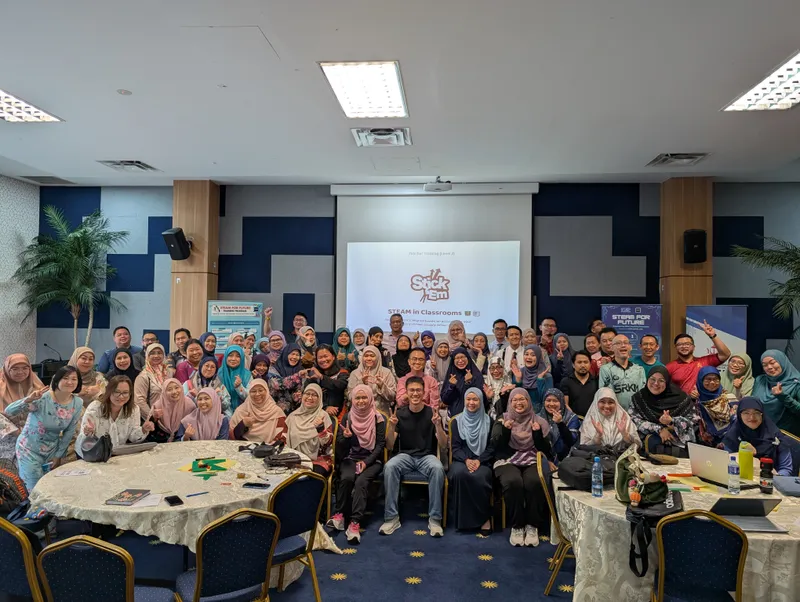
Seventy teachers in one session, building towers and robots and then designing activities for their own subjects.
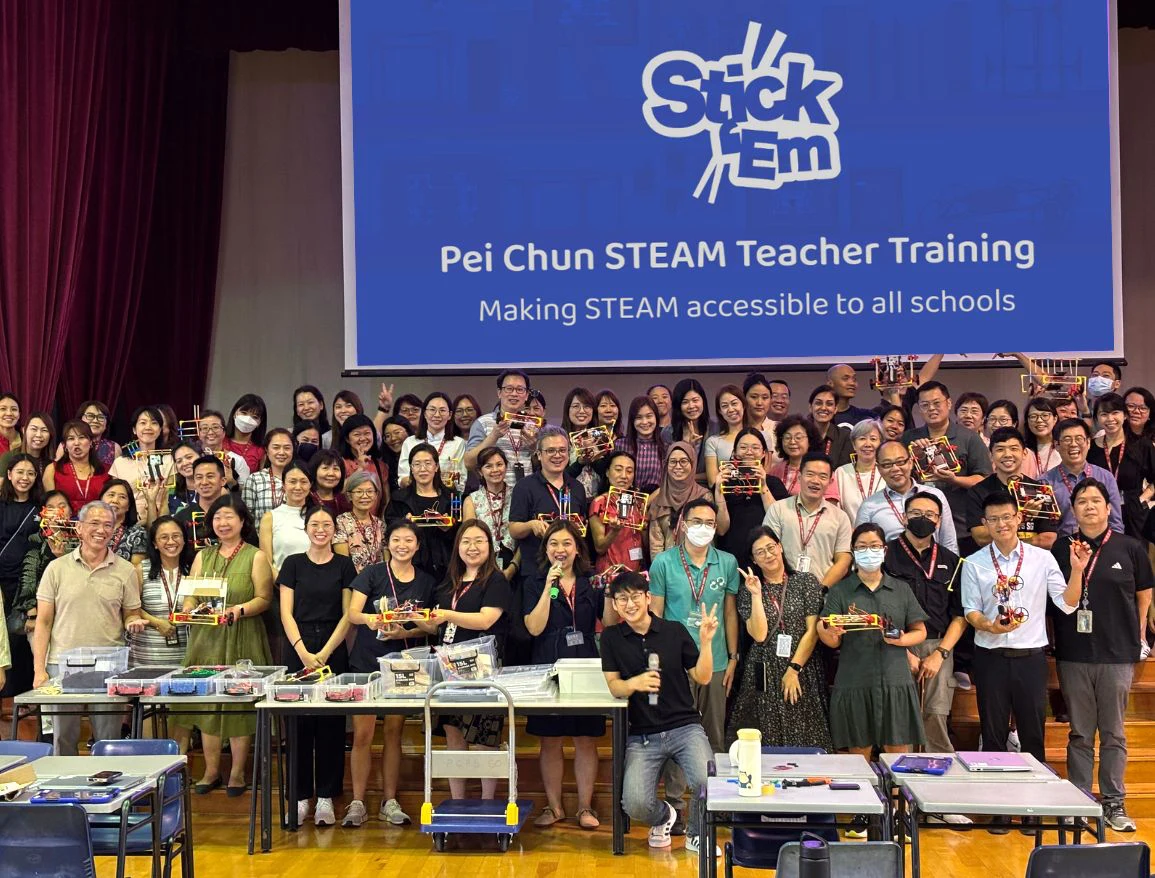
A STEAM teacher training for the whole staff in the school hall, ending with every table’s build on show.
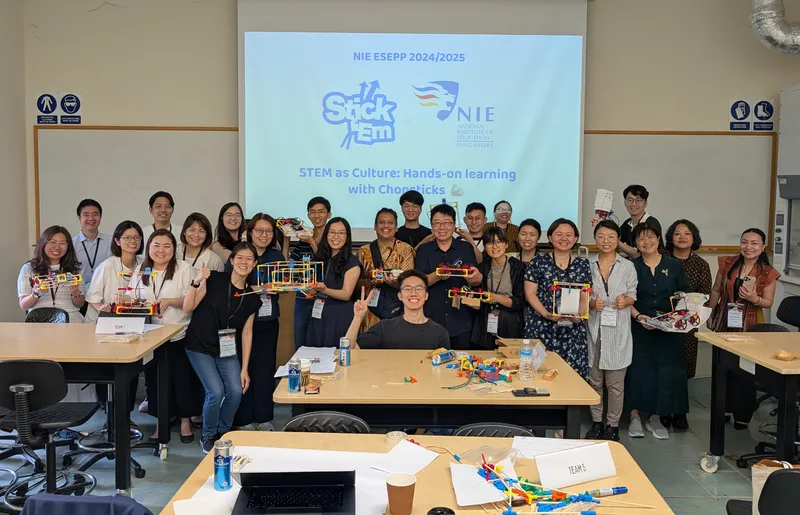
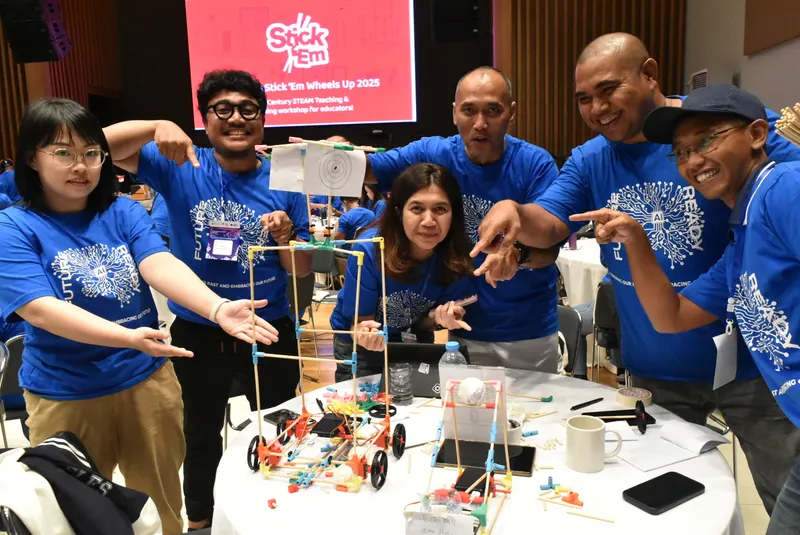
A session on hands-on learning with chopsticks for teachers in NIE’s ESEPP programme. We also ran a workshop at NIE for a visiting group of Indonesian teachers.
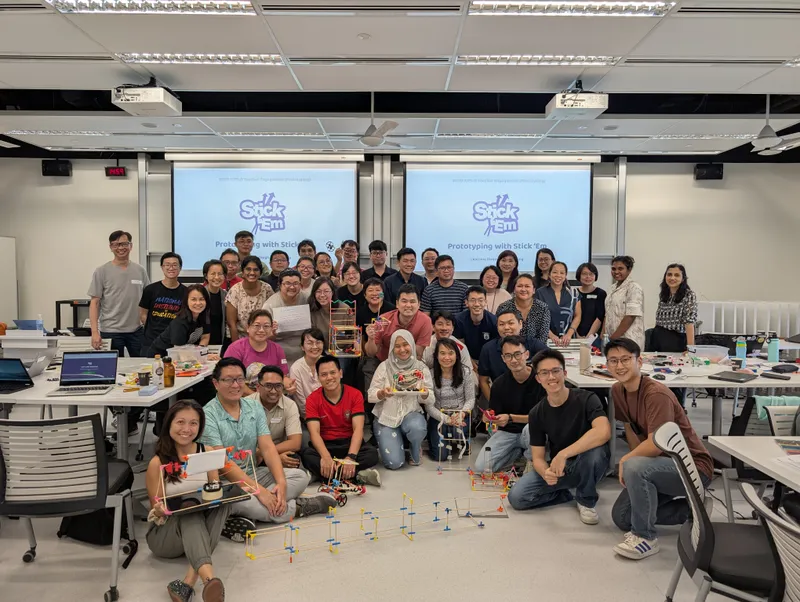
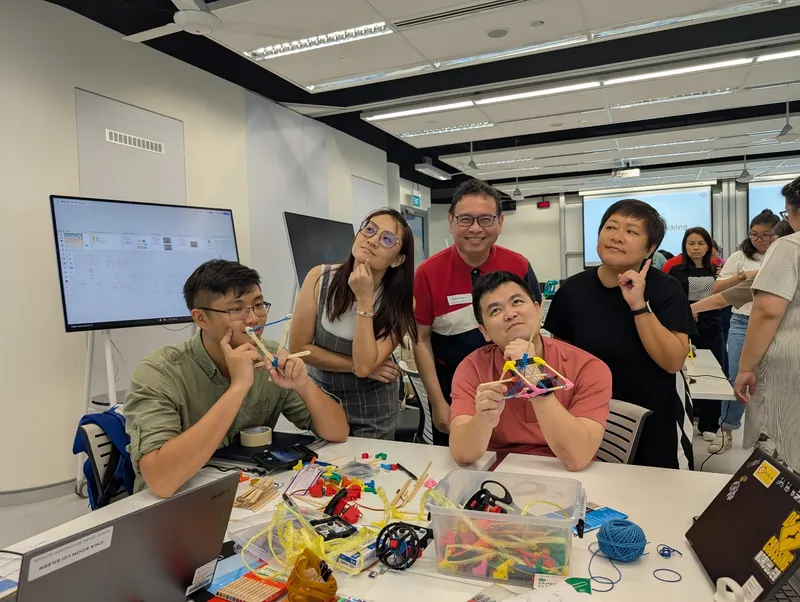
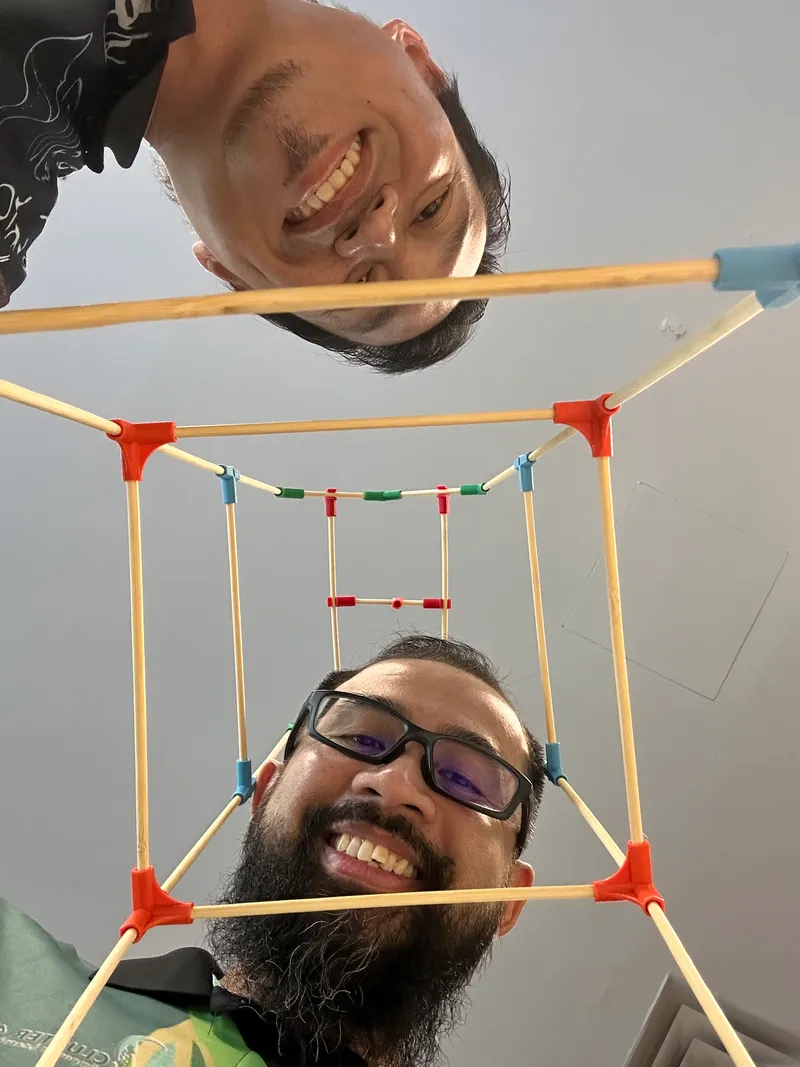
Teachers from different schools spent a day of SUTD’s STEAM Teaching Programme with us, designing interdisciplinary hands-on lessons.
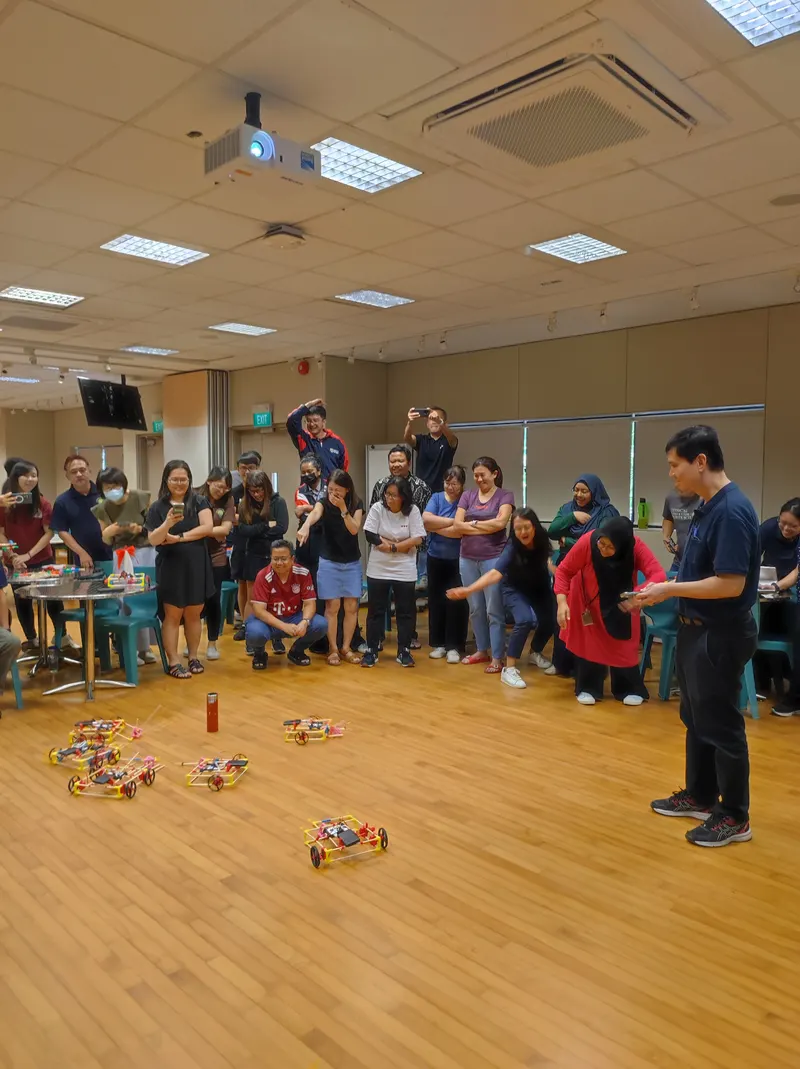
The afternoon ended with a robot car race across the hall, driven from the teachers’ own phones.
We have also run whole-staff workshops at Alexandra Primary, Pioneer Primary and Dunman Secondary, and a session for Science Centre Singapore’s STEM CeLL community of educators on designing E21CC-aligned hands-on activities.
Beyond Singapore
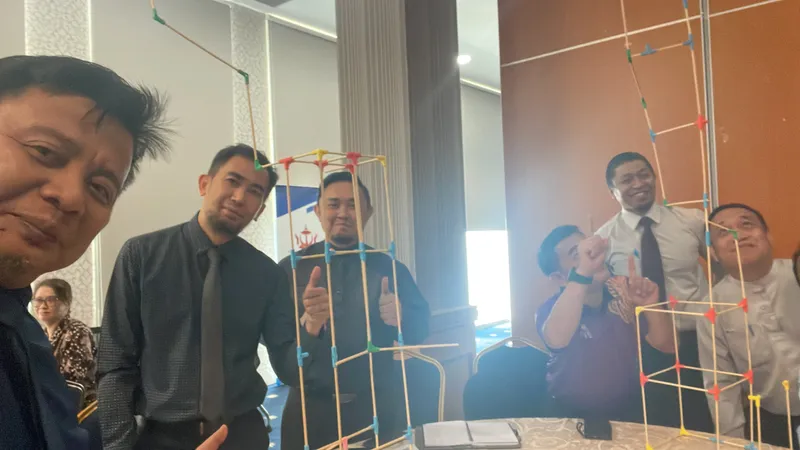
Two teacher workshops with the STEP Centre and the Ministry of Education, about 60 teachers from 30 schools, and one at UBD’s Teacher Academy.
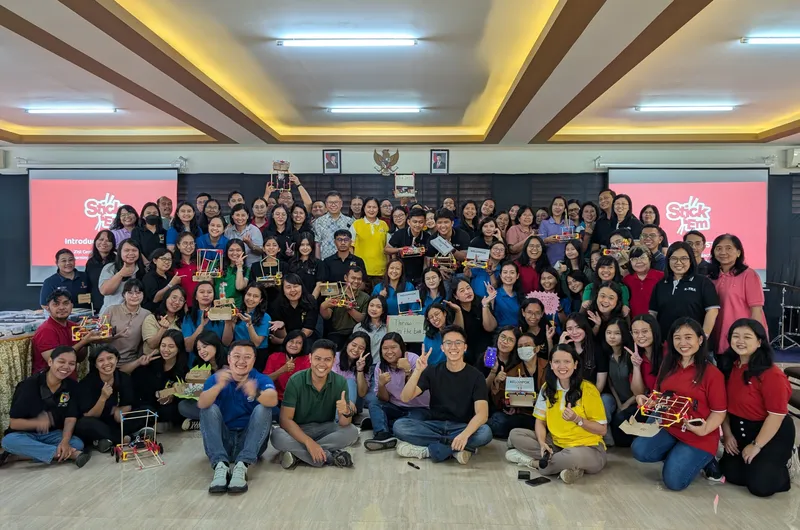
Whole-school training with BPK Penabur in Jakarta and Bandung, run in Bahasa Indonesia from the same template.
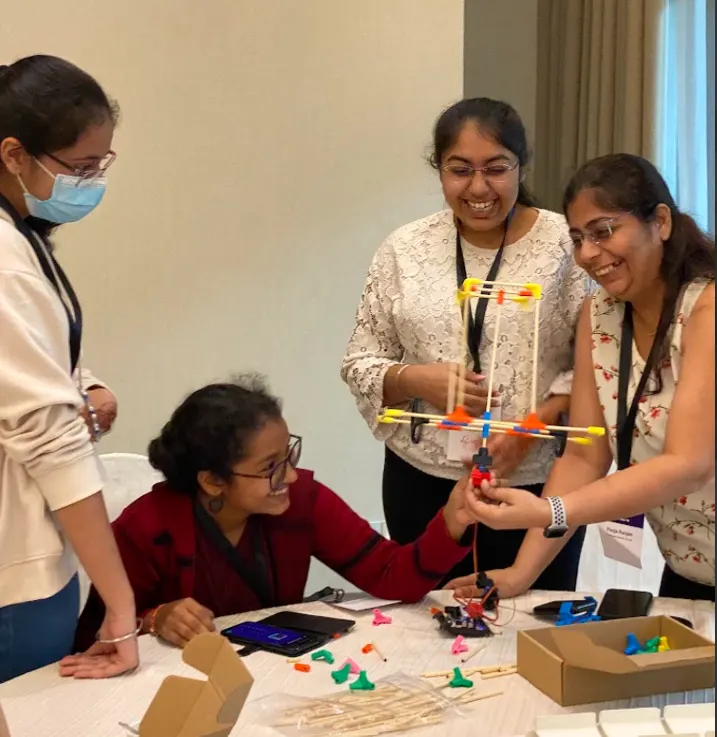
Teacher training in Mumbai and Bangalore with our local partners.
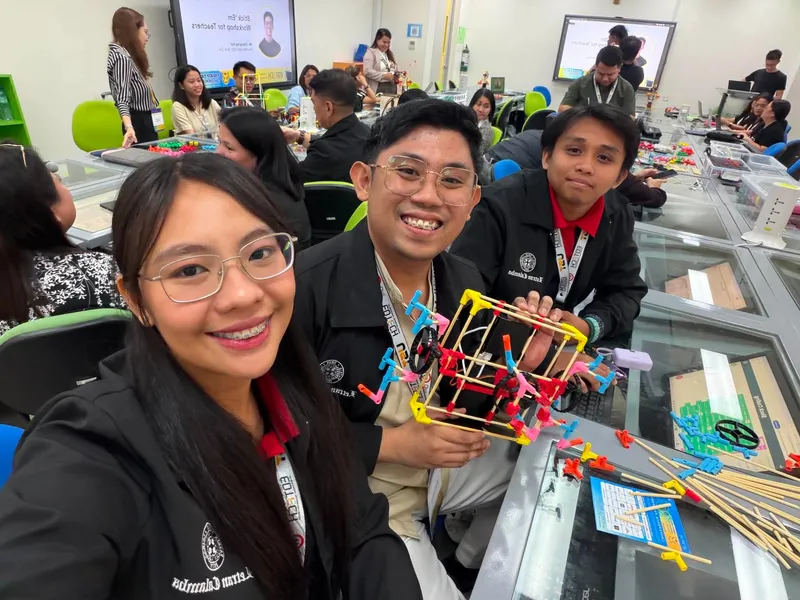
Workshops for teachers with schools and partners across the country.
Who it is for
Any teacher, whatever they teach. Art, language, Mother Tongue and form teachers often get the most out of it.
A staff development day or staff bonding, up to about 200 people in one hall. We bring more trainers for a bigger group.
One subject team, such as science or Mother Tongue, designing activities for the topics they teach next term.
Heads of department and key personnel planning an ALP, a STEAM week or post-exam activities, or a cluster sharing.
We bring the kits and the printed templates. You provide a hall or lab, a projector, and tables for groups of 3 or 4. No laptops needed: teachers drive the robots from their phones. We run workshops all year, including the June and year-end holidays.
Afterwards
For their own subject and class, already tested by colleagues and improved from their feedback.
The Stick ’Em Academy, written with MOE teachers, so preparing a lesson takes about 10 minutes.
If the lesson you need does not exist yet, ask us and we will write it. Most of the Academy started as a teacher’s request.
Beyond the first session
What teachers said afterwards
658 teachers rated the workshop 4.67 out of 5, and 97% gave it a 4 or 5.
“Do it. It’ll change your perception of robotics to a positive one, to something that is actually doable.”
“Common misconception: robotics is hard. But today, it became a myth.”
“I learned that it doesn’t take a robotics teacher to create a robot.”
“Electronics is not as intimidating as I had thought it to be.”
“Design thinking can be engaging and enjoyable, even when using the simplest materials like sticks and clips.”
“Program is easy to follow, even for non computer background.”
“Go join with an open mind and be ready to step out of your comfort zone. This workshop isn’t just about learning new strategies, it’s about rethinking how students learn best.”
“Very eye opening and could make STEAM lesson planning more easier.”

How long it runs, how many teachers can come, what you need to provide and how it is priced.
Running it in a normal classroom: preparation, timing, which subjects, which ages, class management
What arrives, what it is made of, what a student can build, and what happens when a part breaks